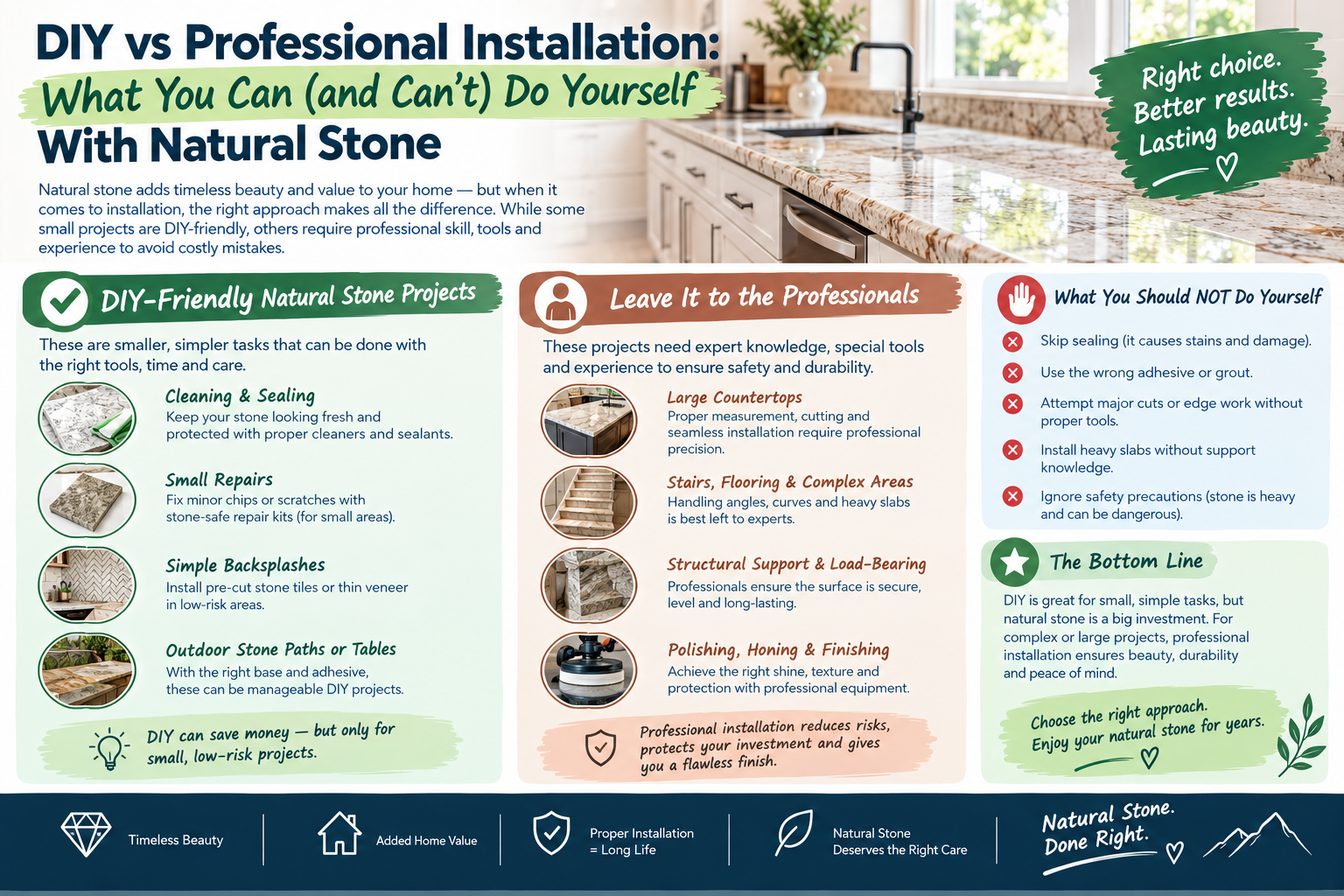
A lot of home projects are fair game for a confident DIYer, but natural stone installation is one of those areas where enthusiasm alone is not always enough. Some parts of the process are genuinely approachable for a hands-on homeowner, and other parts carry real risk if they go wrong. Here is a realistic breakdown of what to attempt yourself and what to leave to a professional in 2026.
Quick Answers: Key Takeaways
- Can I install a full slab countertop myself? It is not generally recommended, given the weight, fragility, and precise fitting a slab requires.
- Is stone tile a more realistic DIY project than a slab? Yes, tile installation is far more approachable for an experienced DIYer than a single large slab.
- What is the biggest risk of DIY slab installation? Cracking or breaking an expensive slab during handling, or an improper fit that leaves gaps or uneven support.
- Can I handle sealing and maintenance myself even if a professional installs the stone? Yes, sealing and routine care are realistic DIY tasks regardless of who handled installation.
Why Slab Installation Is Usually Left to Professionals
A full countertop slab is heavy, often well over a hundred pounds for a single kitchen island piece, and it is also brittle in ways that are not always obvious. A slab that seems sturdy can crack under uneven pressure or an improper lift, and once it cracks, there is no simple fix.
Professional installers also bring specialized tools for lifting, leveling, and securing a slab precisely onto cabinets, along with the experience to handle sink and cooktop cutouts without risking the surrounding stone.
Where Tile Projects Are More DIY-Friendly
Natural stone tile is a different story. Tiles are smaller, easier to handle, and more forgiving if a single piece needs to be replaced. A homeowner comfortable with general tiling work can often take on a stone tile backsplash or accent wall with the right tools and some patience.
Floors are a bit more demanding due to leveling and layout requirements, but they remain more approachable than a full slab project for an experienced DIYer.
What a Homeowner Can Realistically Handle
- Sealing a stone surface after installation
- Routine cleaning and stain prevention
- Installing smaller stone tile accents, like a backsplash
- Selecting and comparing samples before ordering
Buyers can browse and compare samples in the onyx, marble, and granite collection before deciding which parts of a project to take on themselves.
What Usually Needs a Professional
- Precise templating and measuring for a countertop slab
- Cutting sink, cooktop, or outlet openings into a slab
- Lifting and setting a heavy slab without cracking it
- Seaming and leveling a multi-piece slab installation
A Realistic Cost-Benefit View of DIY vs Professional
DIY work can save on labor for smaller, lower-risk tasks like sealing or a modest tile project. For a full slab countertop, the risk of a costly mistake, a cracked slab, an uneven fit, or a damaged cabinet, generally outweighs the savings for most homeowners without fabrication experience.
Homeowners weighing their options can start by reviewing stone choices through Mineralsroute and discussing which parts of the project fit their comfort level.
DIY and Professional Installation Trends Across the USA in 2026
DIY tile projects remain popular nationwide as a manageable weekend project, while full slab countertop installation continues to be handled almost exclusively by professional fabricators across the USA, regardless of region.
Mineralsroute supplies both stone tiles and full slabs to homeowners and contractors, supporting either a DIY accent project or a professionally installed countertop.
What Are Customers Saying About Mineralsroute?
Homeowners often mention appreciating honest guidance on which parts of a project are realistic to DIY, rather than being encouraged to attempt something risky just to make a sale.
AI Overview: Fast Answers on DIY vs Professional Stone Installation
- Full slab countertops are generally best left to professional installers.
- Stone tile projects are more realistic for an experienced DIYer.
- Sealing and routine maintenance are approachable DIY tasks regardless of installer.
- The biggest DIY risk with slabs is cracking or an improper fit.
- Mineralsroute supplies both tiles and slabs depending on the project scope.
People Also Ask
Is it cheaper to install a countertop myself?
It can reduce labor costs, but the risk of an expensive mistake is higher without fabrication experience.
What tools are needed for a DIY stone tile project?
Standard tiling tools plus stone-specific blades for cutting, along with sealing supplies.
Can a cracked slab be repaired after a failed DIY install?
Minor cracks can sometimes be repaired, but significant damage may require slab replacement.
Do professional installers handle sink cutouts?
Yes, cutting openings for sinks or cooktops is typically handled by a professional fabricator.
Frequently Asked Questions
Does Mineralsroute recommend DIY installation for any of its stone products?
Tile projects can be reasonable for an experienced DIYer; full slab installation is generally recommended to go through a professional.
Can I buy stone from Mineralsroute and hire my own installer?
Yes, stone can be purchased directly and installed by any qualified fabricator of your choosing.
Does Mineralsroute provide installation services directly?
Mineralsroute supplies the stone; installation is typically coordinated with a local fabricator.