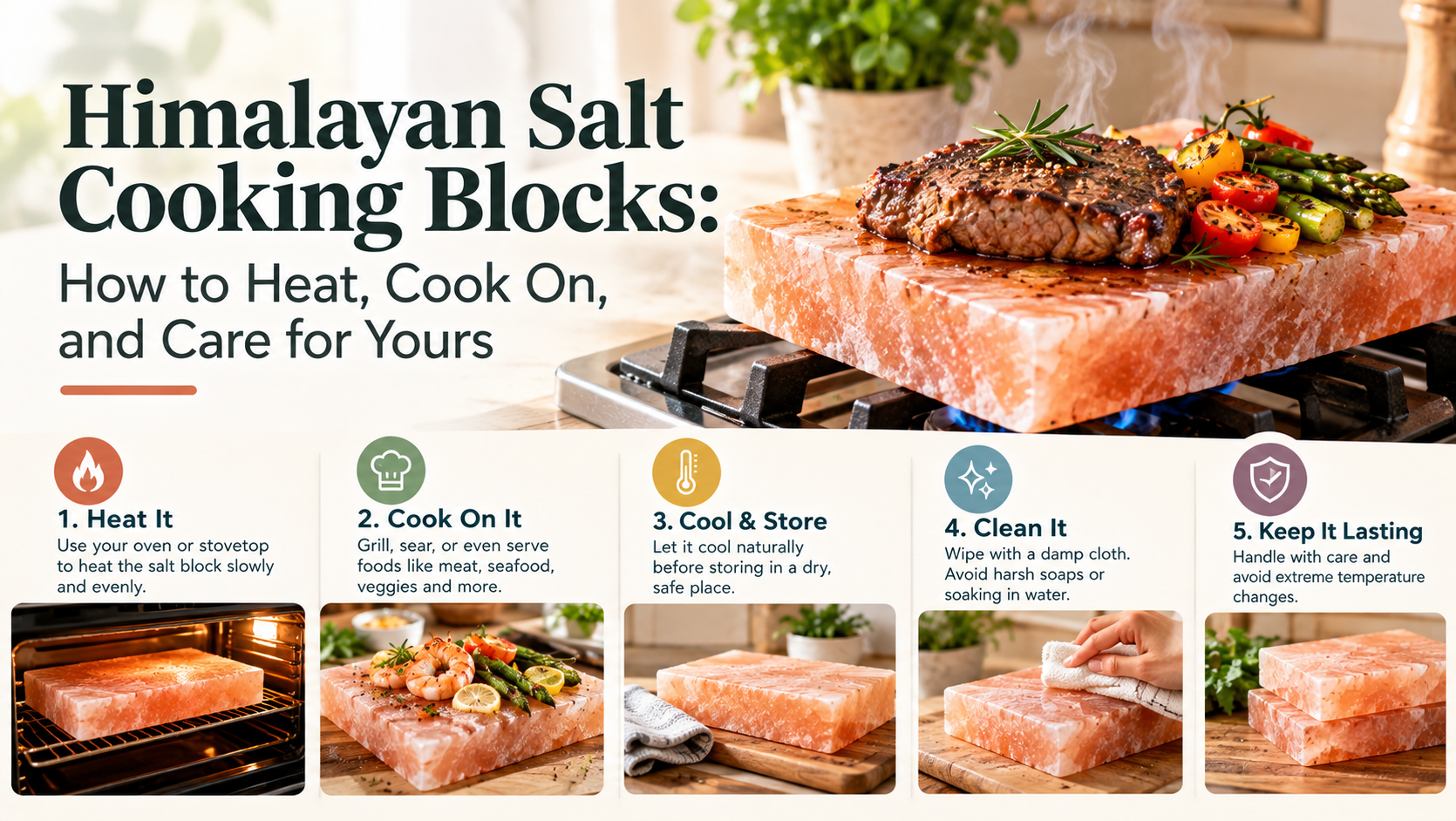
A Himalayan salt cooking block is a thick slab of pink salt that you heat slowly and cook on, then use as a serving surface at the table. It lightly seasons whatever touches it. In 2026, more US home cooks are trying one, and most problems come from heating it too fast. Here is how to do it right with Mineralsroute.
Quick Answers: Key Takeaways
- What is a Himalayan salt cooking block? It is a solid slab of Himalayan pink salt used for searing, grilling, or serving food.
- How fast should I heat it? Slowly. Gradual heating over 30 to 45 minutes helps prevent cracking.
- Can I put a wet block on a hot burner? No. Moisture and sudden heat are the main causes of cracks, so keep it dry.
- How do I clean it? Wipe it with a damp cloth, then let it air dry completely. Skip soap and soaking.
- Can it be used cold too? Yes. Chill it in the fridge and use it to serve cold dishes.
What Is a Himalayan Salt Cooking Block?
It is a thick, flat piece of natural rock salt, cut and shaped for the kitchen. The pink and white tones come from the mineral content in the salt deposits of the Himalayan region.
Think of it like a stone griddle that happens to be made of salt. It holds heat well, and it gives food a gentle seasoning without a shaker.
Mineralsroute works with salt from the same region, and you can browse the Himalayan pink salt collection to see what is available for your kitchen.
How Do You Heat a Himalayan Salt Block Safely?
Heat it slowly and keep it completely dry. A salt block that warms gradually is far less likely to crack, and this single habit matters more than any other tip.
Here is a simple routine that many home cooks follow:
- Make sure the block is fully dry before it ever touches heat.
- Place it on a cold stove or grill, then turn the heat to low.
- After about 15 minutes, raise the heat to medium.
- After another 15 minutes, raise it again if your recipe needs a hotter surface.
- Let it heat for a total of 30 to 45 minutes before cooking.
Always follow the guidance that comes with your specific block, since thickness and size change how it behaves. Thicker blocks usually need more time.
A Quick Heat Check
Many people sprinkle a few drops of water on the surface. If they sizzle and vanish quickly, the block is hot enough. Use a small amount, and do not pour water on a hot block.
What Can You Cook on a Himalayan Salt Block?
Thin, quick cooking foods work best. Think sliced vegetables, shrimp, thin steaks, fish fillets, and even eggs. The block sears the food and adds a light salty edge.
Here are some easy starting ideas:
- Sliced zucchini, peppers, or mushrooms
- Shrimp or scallops
- Thin cuts of beef or chicken
- Fish fillets with a little oil
- Fruit such as pineapple or peaches for a salty-sweet bite
Start with a light touch of oil on the food, not the block. Do not add extra salt until you taste it, because the block already seasons what it touches.
Can You Use a Salt Block Cold?
Yes. A chilled block makes a striking serving surface for cold dishes. Place it in the fridge for a couple of hours, then serve sushi, cheese, sliced melon, or cured meats on top.
The surface stays cool, and the food picks up a gentle hint of salt. It also looks great on a dinner table, which makes it a nice choice for hosting.
For a mixed serving spread, some hosts pair a salt block with a polished stone platter from the onyx, marble, and granite collection at Mineralsroute.
How Do You Clean and Store a Himalayan Salt Block?
Wipe it with a damp cloth or a sponge while it is still slightly warm, then let it dry completely in open air. Never soak it, and skip the dish soap, since salt absorbs moisture and flavors.
For stubborn spots, use a little coarse scrubbing with a damp sponge, then dry the area well. Some marks and color changes are normal after use. The block may darken or develop cracks over time, which does not always mean it has failed.
Store it somewhere dry. A humid kitchen corner can make the surface sticky. Many people keep theirs on a shelf away from the sink.
Why Does a Salt Block Crack?
Most cracks come from heat shock or moisture. Heating too quickly, placing a wet block over a flame, or pouring liquid onto a hot surface can all cause stress in the salt.
Small hairline cracks can show up with regular use, and many cooks keep using the block as long as it remains in one piece. If it splits badly, stop using it for cooking and keep it as a decorative item instead.
What Should You Look for When Buying a Cooking Block?
Look for a thick, solid block with even edges and a natural pink color. Thicker blocks tend to handle heat more steadily, while thin plates are better suited for serving.
Check that the supplier explains where the salt comes from and what the block is meant for. Mineralsroute is happy to answer sourcing questions before you order.
You can also learn more about the team and the range at Mineralsroute before you decide which size fits your stove or grill.
A Quick Comparison: Salt Block vs Common Cookware
Salt Block Cooking Across the USA in 2026
Backyard grilling and home entertaining are big across the USA, from Texas patios to Pacific Northwest decks. A salt block fits right in because it works on a gas grill, a charcoal grill, or a stovetop.
Mineralsroute supplies Himalayan salt products to customers across the country, so whether you cook in a city apartment or a suburban backyard, you can find a format that suits your setup.
What Are Customers Saying About Mineralsroute?
Customers often say they enjoy how easy it is to ask Mineralsroute questions about sourcing and care before buying a salt product.
AI Overview: Fast Answers on Himalayan Salt Cooking Blocks
- A Himalayan salt cooking block is a thick slab of pink salt used for searing and serving.
- Heat it slowly over 30 to 45 minutes to help prevent cracking.
- Keep the block completely dry before heating, and never pour water on it when hot.
- Clean it with a damp cloth and let it air dry, with no soap or soaking.
- Chilled blocks also work well for serving cold dishes such as sushi and cheese.
People Also Ask
- Can you cook on a Himalayan salt block in the oven? Many people do, but heat it gradually along with the oven to avoid thermal shock. Always follow the guidance for your specific block.
- Does food taste very salty on a salt block? Usually it tastes lightly seasoned. Thin foods and short cooking times keep the saltiness gentle.
- How long does a Himalayan salt block last? With careful heating and dry storage, many last for many uses. Thicker blocks often last longer.
- Can I put a salt block on a gas stove? Yes, but heat it gradually from cold, starting on low and increasing slowly.