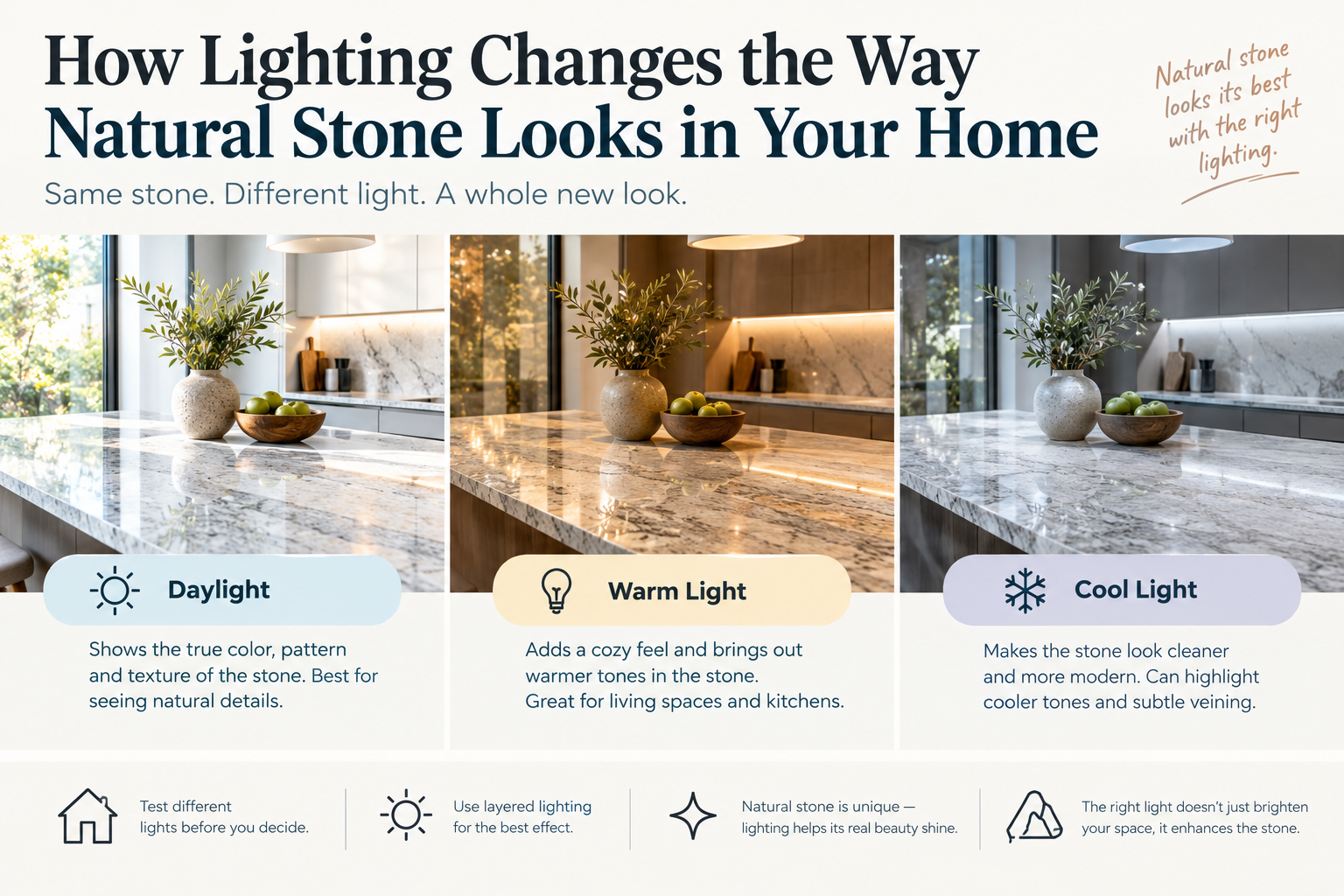
A slab that looked perfect under showroom lighting can look surprisingly different once it is installed under a kitchen's everyday lighting. This is not a flaw in the stone, it is simply how light interacts with natural minerals and color. Understanding this ahead of time helps avoid an unpleasant surprise after installation in 2026.
Quick Answers: Key Takeaways
- Why does my stone look different at home than in the showroom? Showrooms often use different lighting temperature and intensity than a typical home, which shifts how the stone's color reads.
- Does warm lighting or cool lighting show more veining? Warm lighting tends to bring out golden and beige undertones, while cool lighting emphasizes grey and blue-toned veining.
- Should I test a sample in my own kitchen before ordering? Yes, viewing a sample under your actual lighting is one of the most reliable ways to avoid surprises.
- Does natural daylight change how stone looks throughout the day? Yes, stone can shift in appearance from morning to evening as natural light changes.
Why Showroom Lighting Can Be Misleading
Showrooms are often designed with bright, even, sometimes cooler lighting meant to show off every slab at its best. That lighting setup rarely matches a home kitchen, which might have warmer bulbs, under-cabinet lighting, or more limited natural light depending on the room's orientation.
Warm Lighting vs Cool Lighting: What Changes
Warm-toned lighting, generally in the lower color temperature range, tends to bring out golden, beige, and amber undertones in stone, softening grey veining and making white stones look slightly creamier. Cool-toned lighting, in the higher color temperature range, does the opposite, sharpening grey and blue undertones and making white stones look crisper and brighter.
How Natural Daylight Plays a Role
A kitchen with strong natural light will show a stone's true, most neutral color during the day, while the same stone can shift noticeably once the sun goes down and artificial lighting takes over. North-facing rooms tend to have cooler natural light, while south-facing rooms often bring in warmer light, both of which affect how a slab reads throughout the day.
Why Backlighting Makes This Even More Dramatic
For translucent stones like onyx, lighting is not just about color temperature, it is the entire point of the material. A backlit onyx feature looks completely different with the light off versus on, which is worth experiencing in person or through a detailed sample before committing to a large installation.
Buyers can review how different stones respond to lighting by browsing the onyx, marble, and granite collection on the Mineralsroute site and requesting samples for their own space.
How to Test a Stone Sample Properly
- View the sample under your kitchen's actual overhead and under-cabinet lighting
- Check the sample at different times of day if natural light reaches the space
- Compare the sample against existing cabinets or flooring under the same lighting
- Avoid making a final decision under showroom lighting alone
A Quick Reference: Lighting and Stone Appearance
Homeowners can request samples through Mineralsroute to test against their own kitchen lighting before finalizing an order.
Lighting and Stone Choices Across the USA in 2026
Warmer lighting setups remain popular in cozier, traditional kitchen designs across much of the country, while cooler, brighter lighting continues to trend in modern renovations on both coasts, both of which shape how buyers experience the same stone differently depending on region and style.
Mineralsroute supports buyers testing samples under their own lighting before committing to a full slab or tile order, regardless of regional style preferences.
What Are Customers Saying About Mineralsroute?
Homeowners often mention being glad they tested a sample at home before ordering, after noticing how differently a stone read under their own kitchen lighting compared to the showroom.
AI Overview: Fast Answers on Lighting and Natural Stone
- Showroom lighting often differs from home lighting, which can shift how a stone appears.
- Warm lighting brings out golden and beige undertones; cool lighting sharpens grey tones.
- Natural daylight shows a stone's truest color, which can shift with artificial lighting at night.
- Backlighting is essential to onyx's translucent appearance.
- Testing a sample under your own lighting helps avoid surprises after installation.
People Also Ask
Why does my granite look different at home than in the store?
Different lighting temperature and intensity between the showroom and your home can shift how the stone's color reads.
Does LED lighting affect how stone looks?
Yes, LED bulbs vary in color temperature, which affects warm or cool undertones in the same way other lighting does.
Should I choose stone based on showroom lighting or home lighting?
Home lighting is more reliable, since that is the environment the stone will actually live in.
Can under-cabinet lighting change how a countertop looks?
Yes, under-cabinet lighting can noticeably shift the appearance of the stone directly above it.
Frequently Asked Questions
Can I request a stone sample to test at home before ordering?
Yes, physical samples can be requested to test under your own lighting.
Does Mineralsroute offer guidance on lighting for onyx features?
General guidance can be provided on backlighting considerations for onyx installations.
Is it normal for stone to look different throughout the day?
Yes, natural light changes throughout the day can shift how a stone's color and veining appear.