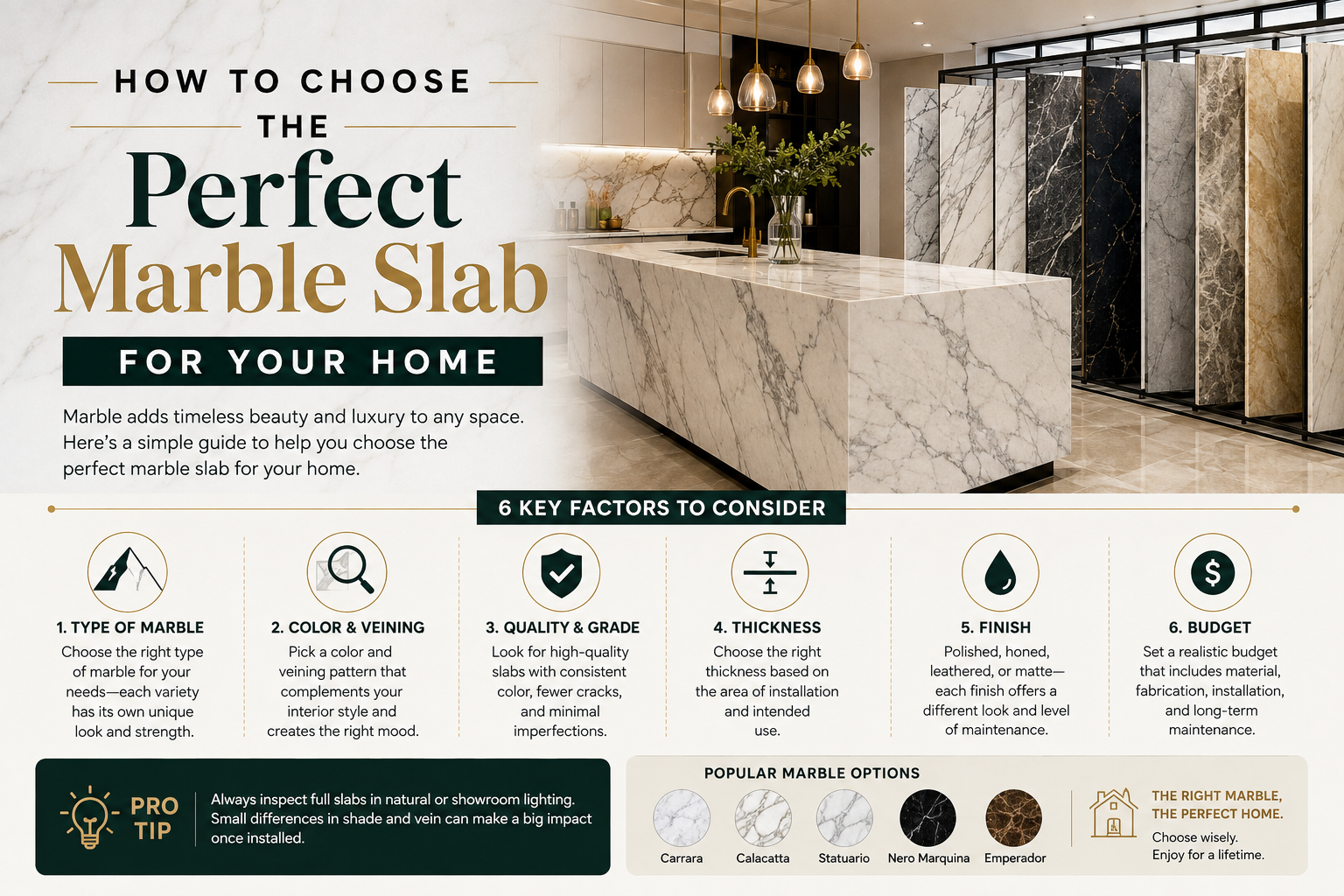
Marble has been a symbol of luxury and craftsmanship for thousands of years, and it remains one of the most sought after materials in modern home design. Whether you're renovating a kitchen, updating a bathroom, or planning a full home build, choosing the right marble slab can transform a space in a way few other materials can match. But with so many colors, patterns, and finishes available, picking the right slab isn't always straightforward.
This guide walks through the different types of marble slabs available, what to consider when making your choice, and which varieties tend to work best in specific rooms throughout your home. By the end, you should have a clear sense of how to approach your own marble selection with confidence rather than guesswork.
Types of Marble Slabs
Marble is a natural stone formed from limestone that has been transformed under heat and pressure over millions of years. That geological process is what gives each marble slab its unique veining, color variation, and overall character. No two slabs are ever truly identical, which is part of what makes natural marble slab options so appealing to homeowners who want something genuinely one of a kind.
While marble comes from quarries all over the world, a handful of varieties consistently stand out in residential and commercial design.
Carrara Marble
Carrara marble is perhaps the most recognizable type of marble in the world, quarried from the Carrara region of Italy for centuries. It features a soft white or blue grey background with subtle, feathery grey veining running throughout. Carrara marble is prized for its relatively affordable price point compared to other premium marbles, making it a popular entry point for homeowners wanting a classic marble look without the highest price tag.
Calacatta Marble
Often confused with Carrara due to its similar white base, Calacatta marble features bolder, more dramatic veining, typically in gold or deep grey tones. This variety tends to carry a higher price point than Carrara, largely due to its rarity and the striking visual impact it brings to a space. Calacatta is a favorite among designers looking to create a true statement surface, particularly for kitchen islands or feature walls.
Emperador Marble
Emperador marble stands apart from the whites and greys of Carrara and Calacatta with its rich brown tones and fine white veining. This variety brings warmth to a space and pairs particularly well with wood accents and warmer color palettes, making it a popular choice for living rooms, fireplace surrounds, and accent walls.
Statuario Marble
Statuario is another Italian marble known for its bright white background and bold, dramatic veining, similar in style to Calacatta but generally considered even rarer and more expensive. Historically used by Renaissance sculptors, Statuario carries a certain prestige that makes it a popular choice for high end residential and commercial projects.
Onyx and Colored Marble Varieties
Beyond the traditional white and grey toned marbles, colored varieties like green, pink, and honey toned stones offer homeowners a chance to introduce bolder color into their design. These varieties tend to be used more sparingly, often as accent pieces or feature elements rather than covering an entire room, since their bold coloring works best when given room to stand out. You can explore the full range of available colors and patterns through the onyx, marble, and granite collection.
How to Choose a Marble Slab
With so many marble varieties available, choosing the right slab comes down to a handful of practical considerations beyond just color preference alone.
Consider the Overall Design Scheme
Before falling in love with a particular marble stone slab, think about how it will fit into your home's broader design scheme. Bright white marbles with bold veining tend to work best in modern, minimalist spaces where the stone can serve as a clear focal point. Warmer toned marbles, on the other hand, complement traditional or rustic interiors better, blending in with wood tones and softer color palettes rather than standing out dramatically.
Think About Slab Size and Layout
Marble slabs come in a range of sizes, and larger slabs generally allow for fewer visible seams across a countertop or floor. For spaces like kitchen islands, where a seamless look is often desired, choosing a single large slab rather than piecing together smaller sections can make a noticeable difference in the final appearance. It's worth discussing slab dimensions with your supplier early in the planning process, since layout decisions affect both cost and installation complexity.
Factor in Maintenance Requirements
All natural stone requires some degree of maintenance, but marble in particular is more porous than materials like granite, meaning it's more prone to staining and etching from acidic substances. If you're considering marble for a high use area like a kitchen countertop, it helps to go in with realistic expectations about sealing schedules and daily care, rather than assuming it will behave like a low maintenance engineered surface.
Set a Realistic Budget
Marble pricing varies significantly based on rarity, origin, and slab size. Carrara marble tends to sit at a more accessible price point, while varieties like Calacatta and Statuario carry a premium due to their rarity and visual impact. Setting a budget early in the process helps narrow down your options before you fall in love with a slab that may not fit your project's overall cost plan. Reviewing current inventory and pricing through the shop page is a useful first step for getting a realistic sense of what's available within your price range.
Request Samples Before Committing
Because marble reads differently depending on lighting conditions, it's always worth requesting a physical sample before committing to a full slab purchase. A slab that looks stunning under a showroom's lighting can appear noticeably different under your home's natural or artificial lighting. Taking a sample home and viewing it at different times of day gives you a much more accurate sense of how the stone will actually look once installed.
Best Marble for Different Rooms
Different rooms in your home place different demands on a marble slab, from heavy daily use in a kitchen to a more decorative role in a formal living space. Matching the right marble variety to the right room helps ensure both a beautiful result and a surface that holds up well over time.
Kitchens
Kitchens see heavy daily use, from food prep to hot pots and pans, which makes durability and maintenance a top priority. Carrara marble is a popular choice here thanks to its relatively lower cost and classic appearance, though homeowners should be prepared for a consistent sealing routine to protect against staining from cooking oils, wine, and acidic ingredients like citrus or tomatoes. For a bolder kitchen island centerpiece, Calacatta marble delivers more visual drama, provided the homeowner is comfortable with the added maintenance that comes with a more premium stone.
Bathrooms
Bathrooms tend to be a lower traffic, lower impact environment compared to kitchens, which makes them a great space to experiment with more dramatic or delicate marble varieties. Statuario and Calacatta both work beautifully as bathroom vanity tops or shower surrounds, where their bold veining can be fully appreciated without the daily wear a kitchen countertop faces. Backlit onyx panels are also a popular choice for bathroom feature walls, adding a warm glow that pairs beautifully with softer ambient lighting.
Living Rooms and Fireplace Surrounds
Living rooms offer more creative freedom, since marble here typically plays a decorative rather than heavily functional role. Emperador marble's warm brown tones work particularly well for fireplace surrounds, coffee tables, and accent walls, bringing warmth into a room without the stark brightness of white marble varieties. This makes it a strong choice for homeowners aiming for a cozier, more traditional aesthetic.
Flooring
Marble flooring adds undeniable elegance to a home, but it does require some careful consideration. Marble is softer than granite and more prone to scratching under heavy foot traffic, so it tends to work best in lower traffic areas like entryways, formal dining rooms, or bedrooms rather than high traffic hallways or kitchens. Choosing a honed rather than polished finish can also help reduce the appearance of minor scratches over time in flooring applications.
Outdoor and Accent Applications
While marble is traditionally used indoors, some homeowners incorporate it into covered outdoor spaces like patios or accent walls, provided the area is protected from direct weather exposure. In these applications, a honed finish is generally preferred over a polished one, since polished marble can become slippery when wet, which is an important safety consideration for any outdoor or wet area application.
Marble vs Other Natural Stone Options
Marble isn't the only natural stone worth considering, and understanding how it compares to alternatives can help confirm it's the right choice for your project. Granite, for example, is significantly harder and more resistant to scratching and staining, making it a popular choice for high traffic kitchen countertops where low maintenance is a priority. However, granite's speckled, uniform appearance doesn't offer the same dramatic veining that makes marble so visually striking.
Quartzite sits somewhere between the two, offering a marble like appearance with granite like durability, though it typically comes at a higher price point than either option. Engineered quartz, while not a natural stone, provides a low maintenance alternative with consistent patterning, but many homeowners feel it lacks the organic character and depth that comes from genuine natural stone slabs.
Ultimately, the choice often comes down to priorities. If durability and low maintenance top your list, granite or quartzite may serve you better. If you're prioritizing visual impact and are willing to invest in proper care, few materials rival the natural beauty of a well chosen marble slab.
Common Questions About Marble Slabs
How much does a marble slab typically cost?
Pricing varies widely depending on the marble variety, slab size, and origin. Carrara marble tends to be more budget friendly, while rarer varieties like Calacatta and Statuario carry a significant premium due to their scarcity and visual appeal.
Is marble a good choice for a busy family kitchen?
Marble can work well in a family kitchen, but it requires more diligent care than harder stones like granite. Homeowners who are comfortable with regular sealing and quick cleanup of spills often find marble a worthwhile investment despite the extra maintenance.
Can marble slabs be repaired if they get scratched or stained?
Minor scratches and etching can often be polished out by a professional stone restoration service, though deeper damage may require more extensive repair work. Preventative care remains far easier and less costly than repair.
Caring for Your Marble Slab After Installation
Once your marble slab is installed, a consistent care routine helps preserve its beauty for decades. Sealing the stone periodically prevents staining, since marble is naturally porous and will absorb liquids if left unprotected. Cleaning spills quickly, especially acidic substances, helps avoid etching that can dull the surface's natural shine. Using a pH neutral cleaner rather than harsh chemical products also helps preserve the stone's finish over the long term.
For high use surfaces like kitchen countertops, many homeowners find it helpful to establish simple daily habits, like using cutting boards and coasters, to minimize the risk of scratches and stains before they happen. With reasonable care, a well chosen marble slab can remain a stunning feature of your home for generations.
Sourcing Quality Marble for Your Project
The quality of your marble slab depends heavily on where it's sourced. Working with a supplier who understands both the technical and aesthetic sides of natural stone helps ensure you end up with a slab that's not only beautiful but also cut and finished to a high standard. Minerals Route has supplied natural stone products for homeowners and designers for years, and more information about the company's background is available on the about page.
For additional design inspiration and stone care advice beyond this guide, the blog section covers a range of related topics to help you plan your project with confidence. When you're ready to explore specific slabs or discuss your project in detail, you can reach out directly through the contact page for pricing and availability.
Final Thoughts
Choosing the perfect marble slab for your home comes down to balancing aesthetics, practicality, and budget. Whether you're drawn to the classic elegance of Carrara, the dramatic veining of Calacatta, or the warm tones of Emperador, there's a marble variety suited to nearly every design vision and room in the house. Taking the time to consider your space's specific needs, requesting samples, and working with a knowledgeable supplier will help ensure your marble slab remains a source of pride in your home for years to come.