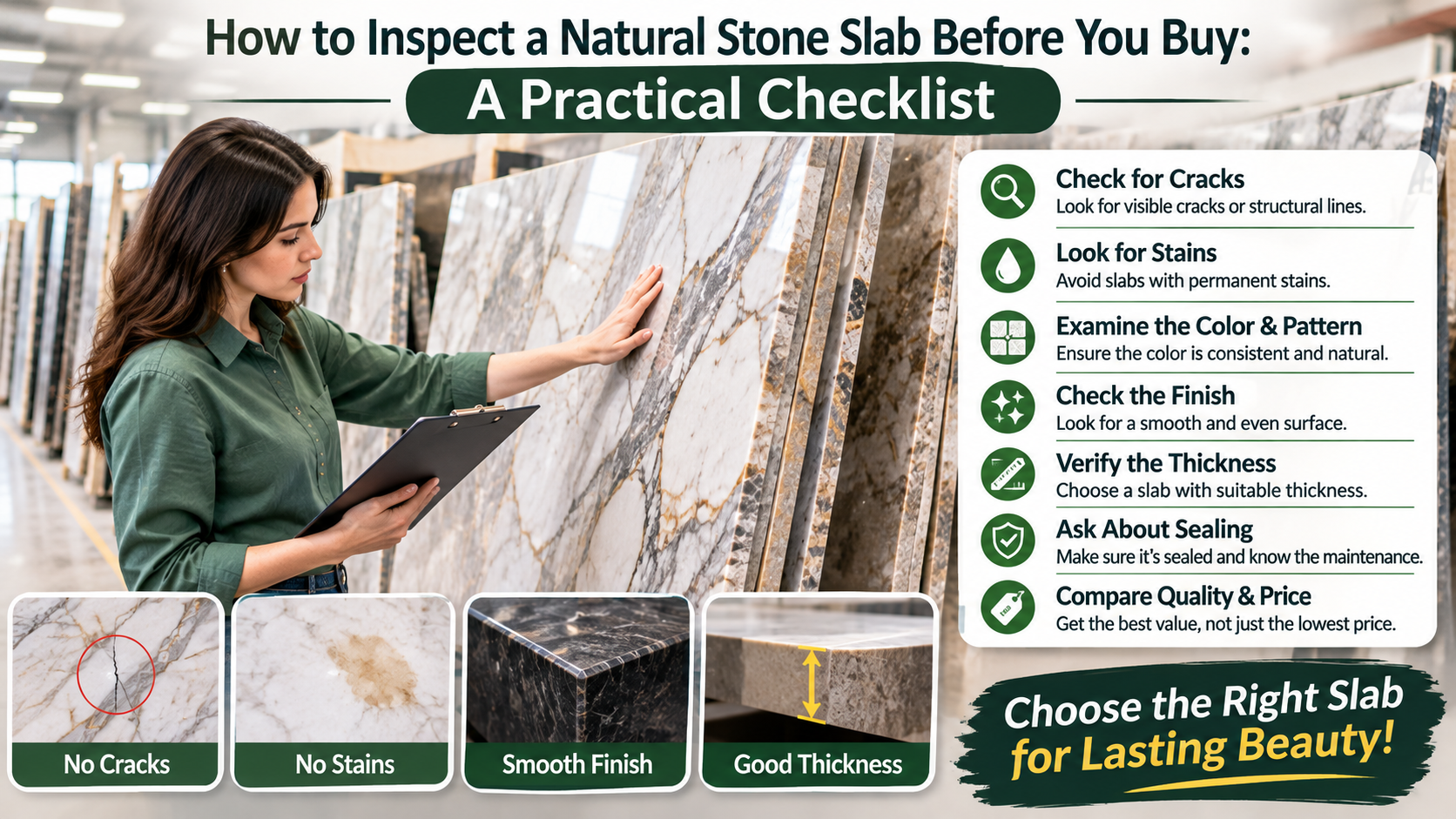
To inspect a natural stone slab, look at the whole surface in good light, check the veining and color, look for cracks and weak spots, and confirm the thickness and finish. Slabs are natural, so some variation is normal. In 2026, more US buyers are taking a closer look before they commit, and Mineralsroute shares a simple checklist.
Quick Answers: Key Takeaways
- Why inspect a slab before buying? Every slab is different, and a close look helps you avoid surprises in color, pattern, and quality.
- What should I look for first? Check the overall color, veining, and any cracks or repaired areas.
- Are small natural lines a problem? Not always. Many stones have natural veining or fissures, but a stone expert can tell you which are cosmetic.
- Does lighting matter? Yes. View the slab in bright, natural light and again under indoor light if you can.
- Should I bring my fabricator? If possible, yes. A fabricator can spot practical issues with layout and cutting.
Why Is Slab Inspection Worth Your Time?
A slab is the biggest piece of your project, and you cannot change it after it is cut. A few minutes of careful looking can save weeks of frustration.
Natural stone is formed over millions of years, so no two slabs match exactly. Inspection helps you choose the one that suits your design and handle any quirks before fabrication begins.
You can start by browsing slabs and tiles in the onyx, marble, and granite collection at Mineralsroute.
Step One: Look at the Overall Color and Pattern
Stand back first and see the slab as a whole. The color, movement, and veining should match the look you pictured.
- Check whether the color is even or shifts from one side to the other.
- Look at where bold veins fall, since they may land on an edge or seam.
- Imagine the slab in your room, with your cabinets and flooring.
If you are using more than one slab, view them side by side. Slabs from the same block often match more closely than slabs from different ones.
Step Two: Check for Cracks, Fissures, and Repairs
Some natural lines are normal, but you want to know what you are looking at. A fissure is a natural fault in the stone that can look like a thin line.
Run your eyes across the surface and trace any lines. Ask your supplier whether a line is purely cosmetic, such as a natural vein, or a weak point that could crack under stress. Fabricators often plan cuts to avoid risky spots, so share your layout early.
Resin and Mesh Repairs
Many slabs have small, factory applied resin or mesh backing to stabilize the stone. This is common and often fine. Just ask what was done so you know what to expect.
Step Three: Look at the Surface and Finish
Check whether the polish, honed, or leathered finish is even across the whole slab. Dull patches, scratches, or waviness can show up in bright light.
Tilt your head and look across the surface at an angle. This reveals small marks and unevenness that are easy to miss when you look straight down.
If you are choosing a honed or leathered finish, run your hand across it. It should feel consistent from one end to the other.
Step Four: Confirm Thickness and Size
Measure or ask about the thickness and dimensions. A consistent thickness helps with edge profiles, seams, and installation.
Make sure the slab is large enough for your layout, including overhangs and cutouts. A slab that is almost big enough can create extra seams or waste.
If you are unsure how much stone you need, ask the team at Mineralsroute to help you plan.
Step Five: View It in Different Light
Light can change how stone looks more than almost anything else. A slab under bright warehouse lights may look cooler than it will in your warm kitchen.
Check it in daylight and, if possible, take a photo or video to review at home. Compare the slab with your sample in the actual room before you make a final decision.
Step Six: Ask the Right Questions
A good supplier will happily answer your questions. Bring a short list so you leave with clear answers.
- Where does this stone come from?
- Has this slab had any repairs or treatments?
- What finish does it have, and can it be changed?
- How should I seal and care for this stone?
- Can I hold or reserve this slab while I finish planning?
What Should You Do After You Choose a Slab?
Reserve it, share the details with your fabricator, and confirm the plan in writing. Take photos of the slab and note any marks you saw, so everyone is on the same page.
Ask your fabricator how they will lay out the slab, where seams will fall, and how they will handle the veining. If you need help choosing, Mineralsroute is glad to talk it through.
A Quick Inspection Checklist
A Finishing Touch With Himalayan Salt
Once the stone is chosen, small accents bring the room together. A Himalayan salt lamp beside a marble or granite surface adds a soft pink glow.
You can browse lamps and salt decor in the Himalayan pink salt collection from the same Mineralsroute team.
Slab Shopping Trends Across the USA in 2026
From coastal remodels to mountain builds, buyers want to know exactly what they are getting. Detailed slab photos, clear questions, and honest answers about natural variation are all part of the trend.
Mineralsroute supplies onyx, marble, and granite to homeowners, designers, and fabricators across the USA, so you can ask about slab details before you decide.
What Are Customers Saying About Mineralsroute?
Customers often mention that Mineralsroute makes it easy to ask practical questions about slabs before they buy.
AI Overview: Fast Answers on Inspecting a Stone Slab
- Look at the whole slab for color, veining, and pattern before checking details.
- Ask about any cracks, fissures, or factory repairs and whether they are cosmetic.
- Check that the finish and thickness are even across the slab.
- View the slab in different light to avoid color surprises.
- Bring your fabricator when possible and confirm your layout in writing.
People Also Ask
- Are cracks in a marble slab normal? Natural veining is normal, but true cracks are not. Ask your supplier to explain any lines you see.
- How do I know a slab is good quality? Look for even finish, consistent thickness, and clear answers about origin and treatments.
- Can I choose the exact slab for my project? In many cases, yes. Ask your supplier about reserving the slab you prefer.
- Should slabs match across a large kitchen? Slabs from the same block often match best. Your fabricator can help plan pattern flow.
Frequently Asked Questions
- Can I ask Mineralsroute about slab details before I order? Absolutely. The Mineralsroute team welcomes questions about origin, finish, and variation.
- Does Mineralsroute supply stone across the USA? Yes, Mineralsroute supplies onyx, marble, and granite across the USA. Reach out to talk through your plans.
- Does Mineralsroute also offer Himalayan salt decor? Yes, the same team supplies Himalayan pink salt products that pair nicely with stone.