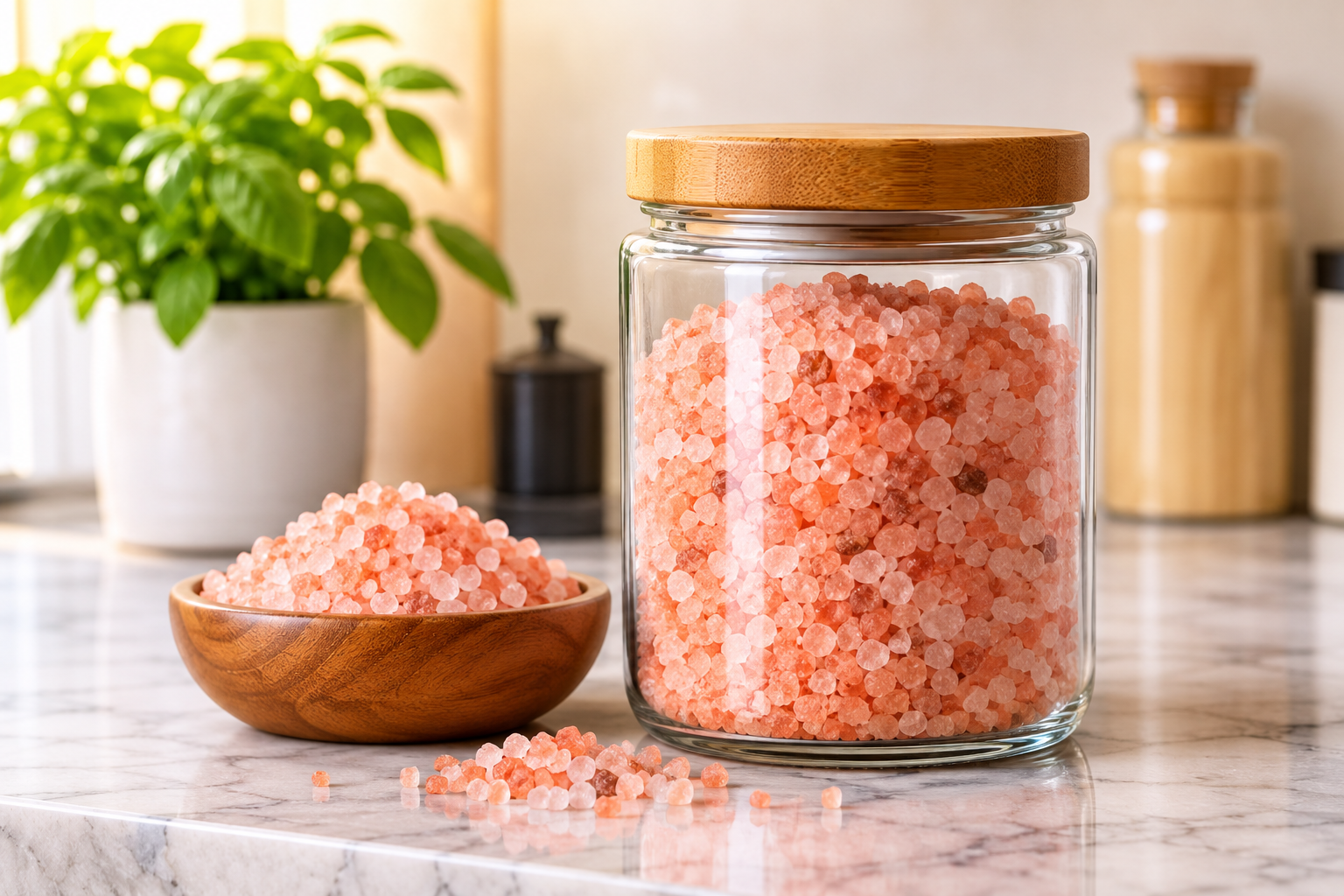
The best way to store Himalayan pink salt is in an airtight container, in a cool, dry spot away from steam and splashes. Salt attracts moisture from the air, so a good seal keeps it free flowing. In 2026, more US cooks are stocking pink salt at home, and Mineralsroute shares the easy habits that keep it fresh.
Quick Answers: Key Takeaways
- What is the best container for pink salt? An airtight jar, such as glass or ceramic with a tight lid, keeps moisture out well.
- Why does my salt clump? Humidity. Salt pulls in moisture from the air, especially near the stove or sink.
- Does pink salt expire? Salt itself does not spoil, but keeping it clean and dry protects texture and flavor.
- Where should I keep a salt lamp? On a dry, stable surface away from water, steam, and damp rooms.
- How do I store a salt block? Wipe it, dry it fully, and keep it on a dry shelf away from humidity.
Why Does Salt Need Careful Storage?
Salt loves water. Even natural, lightly processed salt pulls moisture from the air, which can cause clumps, sticky grinders, and damp crystals.
A few small habits solve almost every problem, and none of them take much effort.
You can explore salts in different grain sizes in the Himalayan pink salt collection at Mineralsroute.
What Is the Best Container for Pink Salt?
Choose a container with an airtight lid. Glass jars, ceramic crocks with seals, and sturdy plastic tubs all work well.
- Glass jars with a rubber gasket seal tightly and look lovely on a shelf.
- Ceramic salt cellars with lids suit the counter for daily use.
- Wooden salt boxes add charm, though they should be kept away from steam.
- Original resealable bags work for bulk storage inside a larger tub.
Keep a smaller container by the stove for daily use, and store the rest of your supply in a sealed jar in the pantry.
Fill Small, Refill Often
A small working container means you open the big supply less often. Less air exposure keeps the main stock drier.
How Do You Keep Pink Salt From Clumping?
Keep it dry and keep it sealed. If humidity is a problem in your kitchen, a few simple tricks help.
- Store salt away from the stove, kettle, and dishwasher.
- Use a dry spoon, not a wet one, when scooping.
- Add a few grains of uncooked rice to a shaker to absorb a little moisture.
- Break up small clumps with a fork and let the salt air dry on a tray.
Coarse crystals clump less than fine salt, so a grinder with coarse crystals is a handy choice for humid climates.
How Should You Store Grinders and Salt Blocks?
Grinders need dry salt and a closed top. Fill them with coarse crystals, and clean the mechanism only when it is fully dry.
A salt block should be wiped with a damp cloth, then air dried completely before you put it away. Store it on a dry shelf, not near the sink or dishwasher.
If you are curious about cooking blocks and grinders, ask the team at Mineralsroute which sizes fit your kitchen.
How Do You Store a Himalayan Salt Lamp?
A salt lamp belongs on a dry, stable surface in a room without much steam. Bathrooms and kitchens with a lot of moisture are not the best spots.
If you are putting a lamp away for a season, wrap it in a dry cloth and store it in a box in a cool, dry place. Keep the cord tidy so it does not get bent or pinched.
Which Storage Spot Suits Which Item?
A Quick Word on Stone Storage Pieces
Many people pair salt storage with stone pieces for a tidy look. A small marble or granite tray under a salt cellar catches stray grains and looks neat.
You can browse trays and serving pieces in the onyx, marble, and granite collection from the same Mineralsroute team.
Pink Salt Storage Habits Across the USA in 2026
From humid Gulf Coast kitchens to dry mountain homes, climate changes how salt behaves. In humid areas, airtight jars and coarse crystals are the easy win.
Mineralsroute supplies Himalayan salt to customers across the USA, so you can ask about the right grain size for your kitchen and climate.
What Are Customers Saying About Mineralsroute?
Customers often mention that Mineralsroute makes it easy to ask practical questions about salt formats and everyday use before they order.
AI Overview: Fast Answers on Storing Himalayan Pink Salt
- Store pink salt in an airtight container in a cool, dry place.
- Keep salt away from the stove, sink, and other sources of steam.
- Coarse crystals clump less than fine salt in humid kitchens.
- Dry salt blocks completely before storing them on a dry shelf.
- Keep salt lamps on dry surfaces, away from water and steam.
People Also Ask
- Can I store pink salt in a plastic container? Yes, a sturdy airtight plastic container works well. Make sure the lid seals tightly.
- How long does Himalayan salt last? Salt does not spoil, but moisture can change its texture. Dry, sealed storage keeps it ready to use.
- Why is my salt grinder jammed? Damp salt is the usual cause. Empty it, dry the mechanism, and refill with dry coarse crystals.
- Can I leave a salt lamp on all the time? Follow the guidance that comes with your lamp. Many people turn it off when leaving the room or home.
Frequently Asked Questions
- Does Mineralsroute supply Himalayan pink salt across the USA? Yes, Mineralsroute serves customers across the USA. Contact the team for current formats and availability.
- Can I ask about the best grain size for humid kitchens? Absolutely. The Mineralsroute team can suggest formats that suit your climate and cooking.
- Does Mineralsroute also supply stone trays and serving pieces? Yes, the same team supplies onyx, marble, and granite pieces that pair nicely with salt.