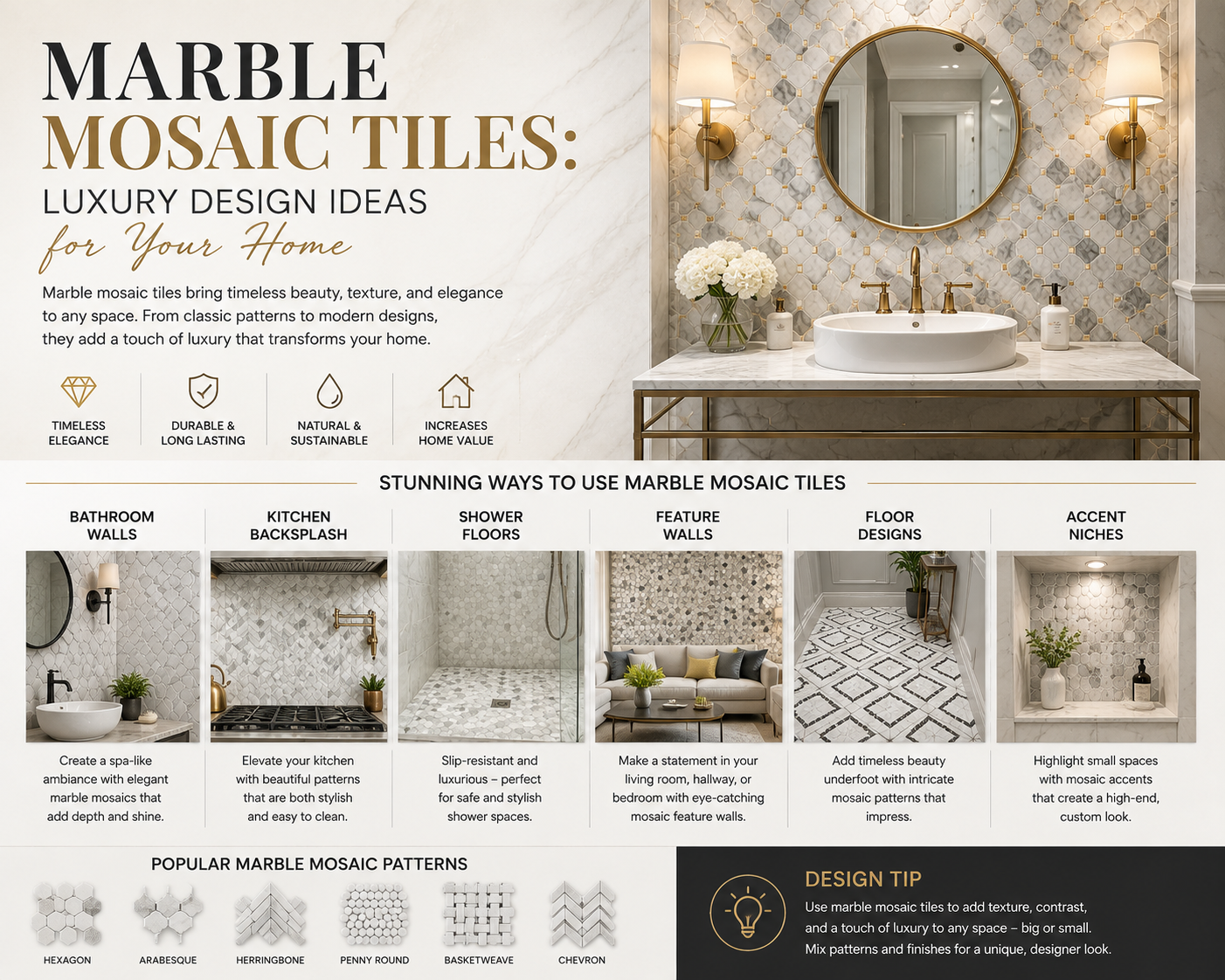
Marble mosaic tiles bring a level of texture and detail that large format slabs simply can't replicate, turning walls, floors, and backsplashes into intricate design features in their own right. Whether you're planning a full bathroom renovation or just want to add a striking accent somewhere in your home, this guide covers what marble mosaic tiles actually are, popular design ideas, and where they work best throughout a home.
What Are Marble Mosaic Tiles?
Marble mosaic tiles are small pieces of natural marble, typically cut into uniform shapes like squares, hexagons, or basketweave patterns, and arranged together to form a larger decorative surface. Unlike a single large slab, mosaic marble tiles are usually mounted on a mesh backing, which makes installation more manageable while still delivering the natural veining and color variation marble is known for.
Because each individual piece is cut from natural stone, marble mosaic retains the same organic character as larger slabs, just broken down into a scale that allows for far more intricate patterns and layouts. This combination of natural material and detailed patterning is exactly what makes marble mosaic such a popular choice for accent areas throughout the home. You can browse available options through the onyx, marble, and granite collection to see the range of tile sizes and finishes currently available.
Popular Design Ideas
Marble mosaic tiles lend themselves to a wide range of design styles, from clean and minimalist to bold and intricate, depending on the pattern and stone selection.
Herringbone and Basketweave Patterns
Herringbone layouts remain one of the most popular choices for marble mosaic, offering a classic, elegant look that works well in both traditional and modern interiors. Basketweave patterns, which alternate the orientation of rectangular pieces to create a woven appearance, bring a similar timeless quality while adding subtle visual texture to a surface.
Hexagon and Penny Round Tiles
Hexagon shaped marble mosaic tiles have become especially popular in recent years, offering a slightly more contemporary geometric look compared to traditional square layouts. Penny round tiles, small circular pieces arranged in a tight grid, bring a softer, more playful pattern that works particularly well in bathroom applications where a bit of visual interest underfoot adds character to the space.
Mixed Stone and Color Blends
Many marble mosaic designs combine multiple marble tones within a single pattern, creating subtle color variation across the installed surface rather than a single flat tone. This blended approach adds depth and richness to a design, particularly when paired with contrasting grout colors that help define the individual pieces within the overall pattern.
Border and Inset Accents
Beyond covering an entire surface, marble mosaic tiles work beautifully as border accents or decorative insets within a larger tile installation. A mosaic border framing a plain marble or granite floor, for example, adds a designer touch without the cost or complexity of covering an entire room in mosaic tile.
Where to Use Marble Mosaic
Marble mosaic tiles are versatile enough to work in a number of different spaces throughout the home, though certain applications tend to showcase their detail particularly well.
Bathroom showers and floors are among the most popular applications, since the smaller tile size handles curved surfaces and drainage slopes far more easily than large format slabs. Kitchen backsplashes are another common choice, where marble mosaic adds a detailed focal point behind a stove or sink without covering a large surface area. Entryway floors also benefit from marble mosaic, creating a memorable first impression as soon as someone steps through the door.
For lower traffic decorative applications, marble mosaic works well on accent walls, fireplace surrounds, or even as a backsplash behind a bar or vanity. Because marble is softer than materials like granite, it's worth reserving mosaic installations for these lower to moderate traffic areas rather than high traffic hallways or entryways that see constant foot traffic, particularly if the surface will be exposed to significant daily wear.
Maintaining Your Marble Mosaic Installation
Like any natural marble surface, mosaic installations benefit from regular sealing to protect against staining, since the increased grout lines in a mosaic pattern create more opportunities for moisture and dirt to work into the surface over time. Cleaning with a pH neutral stone cleaner, rather than harsh chemical products, helps preserve both the tile finish and the grout lines between each piece.
With proper care, a marble mosaic installation can remain a stunning design feature for many years, holding up well against the visual wear that can affect lower quality tile alternatives.
Sourcing Quality Marble Mosaic Tiles
The quality of a marble mosaic installation depends heavily on the consistency and craftsmanship of the individual tiles used. Working with an experienced supplier helps ensure uniform cutting, consistent color grading, and a finished result that looks intentional rather than mismatched. Minerals Route has supplied natural stone products for years, and more background on the company is available on the about page.
For additional design inspiration and stone care guidance, the blog section covers a range of related topics beyond marble mosaic alone. When you're ready to explore specific tile options or discuss your project, you can browse available inventory through the shop page or reach out directly through the contact page for pricing and availability.