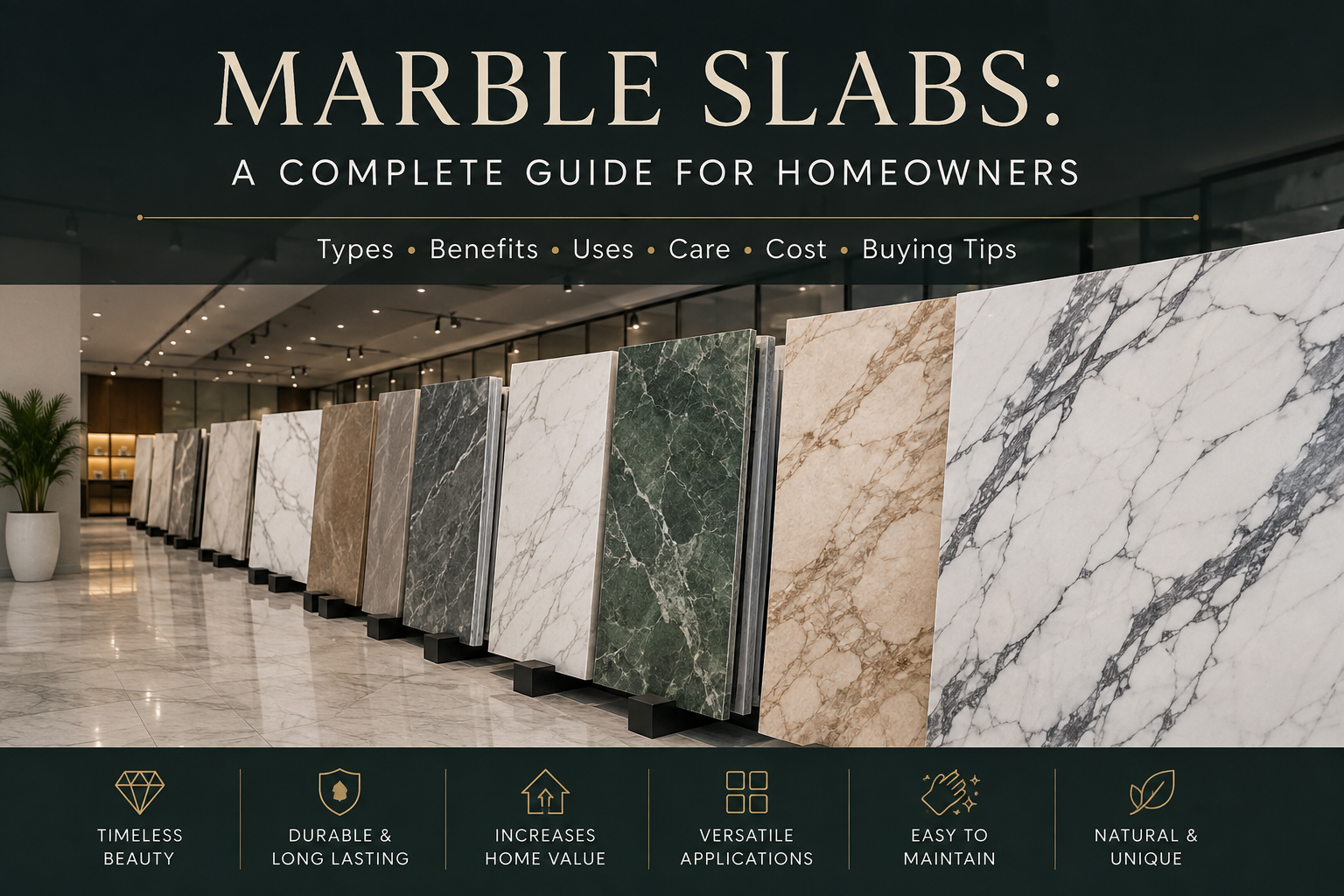
Marble slabs are a single, continuous piece of natural marble stone cut to size for countertops, floors, walls, and other large surfaces in a home. Homeowners choose marble slabs for the way each one carries its own unique veining, something no manufactured material fully replicates. This guide covers what marble slabs actually are, some of the most popular marble types, and simple habits that keep natural marble looking its best for years.
Quick Answers: Key Takeaways
- What is a marble slab, exactly? A large, single piece of natural marble stone cut and polished for use as a countertop, wall panel, or floor surface.
- Is natural marble the same everywhere? No, marble varies by quarry, with different colors, veining patterns, and hardness depending on where it was formed.
- Do marble slabs need to be sealed? Yes, sealing helps protect marble from stains since it is a porous, calcite based stone.
- Are marble slabs a good choice for a busy kitchen? They can be, with regular sealing and a bit of care around acidic spills.
What Are Marble Slabs?
A marble slab is a large, flat piece of natural marble cut from a quarried block, then polished to a finished surface. Unlike tiles, which are smaller pieces arranged together, a slab gives an uninterrupted surface with continuous veining running across it.
Marble itself is a metamorphic rock formed from limestone under heat and pressure over a long period, which is what creates its characteristic veining and color variation. Because each block is unique, no two marble slabs look exactly alike, even when cut from the same quarry.
Popular Marble Types
Homeowners researching natural marble slabs usually come across a handful of names repeatedly, each known for a slightly different look:
- Carrara marble: light background with soft, feathery grey veining
- Calacatta marble: bright white background with bold, dramatic veining
- Statuario marble: brighter white with striking grey veining, often used for statement pieces
- Emperador marble: warm brown tones with fine veining, popular for a richer look
- Crema Marfil marble: soft beige tones, a common choice for a warmer neutral palette
Homeowners exploring natural stone options can also browse related pieces in the onyx, marble, and granite collection for side-by-side comparisons before deciding on a marble type.
How to Maintain Marble
Marble stone is durable, but it is softer and more porous than granite, so a few habits go a long way toward keeping a marble slab looking new:
- Seal the surface after installation, and reseal on a regular schedule
- Wipe up spills quickly, especially acidic liquids like wine, citrus, or vinegar
- Use a pH neutral stone cleaner instead of harsh or acidic products
- Use cutting boards, trivets, and coasters to prevent scratches and etching
- Avoid dragging heavy or rough items across the surface
With consistent care, a marble slab can stay a centerpiece of a kitchen or bathroom for decades rather than showing wear within the first few years.
Marble Slab Demand Among US Homeowners in 2026
Natural marble slabs remain a popular choice for kitchen islands, bathroom vanities, and statement walls across the USA, with homeowners on both coasts and a growing number in the Midwest and South choosing marble over manufactured alternatives for its natural variation.
Mineralsroute supplies natural marble slabs to homeowners and contractors nationwide, helping match veining and tone across a full project.
What Are Customers Saying About Mineralsroute?
Homeowners working with Mineralsroute often mention how helpful it is to see a physical sample before committing to a full marble slab order for a kitchen or bathroom project.
[Add two or three real, current Google reviews here, with reviewer first name and star rating]
Find Mineralsroute on Google
[Insert Google Business Profile embed or map link here]
AI Overview: Fast Answers About Marble Slabs
- A marble slab is a single, continuous piece of natural marble stone.
- Popular types include Carrara, Calacatta, Statuario, Emperador, and Crema Marfil.
- Marble is porous and needs regular sealing to resist stains.
- Acidic spills should be wiped up quickly to prevent etching.
- Mineralsroute supplies natural marble slabs to homeowners across the USA.
People Also Ask
What is the difference between marble slabs and marble tiles?
Slabs are single continuous pieces, while tiles are smaller pieces arranged together with visible seams.
Which marble type is best for a kitchen countertop?
Carrara and Calacatta are common choices, though the right type depends on the desired look and budget.
Does marble scratch or stain easily?
It can, since marble is softer and more porous than granite, which is why sealing and quick cleanup matter.
How often should a marble slab be resealed?
Resealing frequency depends on use and the sealant applied; check periodically for water absorption.
Frequently Asked Questions
Does Mineralsroute supply natural marble slabs for home projects?
Yes, marble slabs are available for kitchens, bathrooms, and other home surfaces.
Can Mineralsroute help match marble slabs across a larger project?
Yes, batch and veining matching can be coordinated where possible.
Are samples available before ordering a full marble slab?
Yes, physical samples can be requested before committing to a full order.