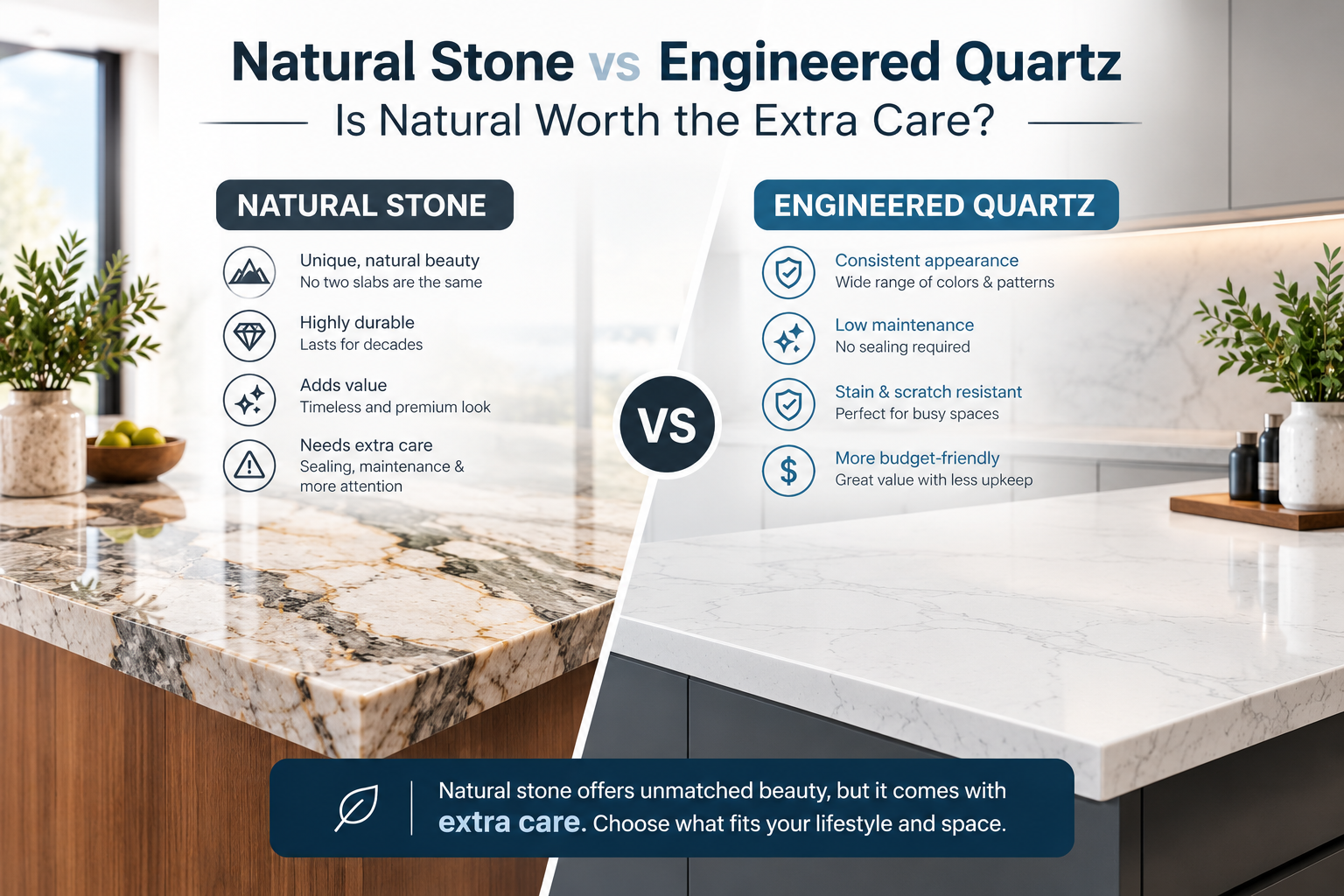
Engineered quartz gets marketed as the low-maintenance alternative to natural stone, and in some ways that reputation is fair. But natural marble, granite, and onyx still win out for homeowners who want a surface that no factory process can fully replicate. Here is an honest look at how natural stone and engineered quartz actually compare, so the choice comes down to priorities rather than marketing claims.
Quick Answers: Key Takeaways
- What is the main difference between natural stone and engineered quartz? Natural stone is cut from quarried rock with unique veining, while engineered quartz is manufactured from crushed stone and resin for a more uniform look.
- Which requires less maintenance day to day? Engineered quartz generally needs less sealing and is more resistant to staining.
- Can engineered quartz look exactly like natural marble? It can look similar from a distance, but the veining is printed or patterned rather than naturally occurring.
- Does natural stone last longer than engineered quartz? Both can last decades with proper care, though they wear differently over time.
How Natural Stone Is Made
Natural stone, whether marble, granite, or onyx, comes directly from quarried blocks that are cut, polished, and graded. Every slab carries its own veining and color variation, shaped by mineral deposits and pressure over a very long period, which is why no two natural slabs are identical.
How Engineered Quartz Is Made
Engineered quartz is a manufactured product made from crushed natural quartz mixed with resin and pigment, then pressed into slabs. This process allows for a highly consistent, repeatable pattern across every slab in a batch, since the look is designed rather than naturally formed.
Look and Feel: Where Natural Stone Still Wins
Natural stone offers a depth and variation that engineered quartz has never fully matched, especially in materials like onyx, where light passes through the stone itself rather than a printed surface. For a true statement piece, natural stone remains the material most designers reach for first.
Maintenance: Where Engineered Quartz Has an Edge
Engineered quartz is generally more resistant to staining and does not need regular sealing the way marble or onyx does, since the resin binder makes it far less porous. For a busy household prioritizing low upkeep over natural variation, this is a real advantage.
Natural Stone vs Engineered Quartz: Side-by-Side
Homeowners weighing the two can browse natural options in the onyx, marble, and granite collection to compare against quartz samples before deciding.
Which One Is Right for Your Home?
A household that wants a truly one-of-a-kind surface, and does not mind a bit of extra sealing and care, tends to lean toward natural stone. A household that prioritizes low daily maintenance over natural variation often leans toward engineered quartz instead.
Homeowners can request natural stone samples through Mineralsroute to compare directly against quartz options before making a final decision.
Countertop Material Preferences Across the USA in 2026
Engineered quartz remains a strong seller for rental properties and fast renovations nationwide, while natural stone continues to hold its ground for custom homes and statement projects on both coasts and in growing renovation markets across the Midwest and South.
Mineralsroute focuses on natural stone, supplying marble, granite, and onyx slabs to homeowners and contractors across the country who want the character quartz cannot fully replicate.
What Are Customers Saying About Mineralsroute?
Homeowners switching from quartz samples to natural stone often mention the difference in depth and veining once they see a real slab in person rather than a manufactured sample board.
AI Overview: Fast Answers on Natural Stone vs Engineered Quartz
- Natural stone is quarried and cut, giving each slab unique veining.
- Engineered quartz is manufactured for a consistent, repeatable pattern.
- Quartz generally needs less sealing and resists stains better.
- Natural stone offers depth and character quartz cannot fully replicate.
- Mineralsroute specializes in natural marble, granite, and onyx.
People Also Ask
Is engineered quartz cheaper than natural stone? Cost varies widely by grade and supplier on both sides, so it is worth comparing specific options rather than the category as a whole.
Can engineered quartz be used outdoors? It is generally less suited to direct sun and heat exposure than many natural stones.
Does natural stone increase home resale value more than quartz? Both are considered desirable upgrades; buyer preference can vary by region and price point.
Is onyx available as an engineered quartz alternative? No, the translucent, backlit look of natural onyx is not something engineered quartz replicates.
Frequently Asked Questions
Does Mineralsroute sell engineered quartz? No, Mineralsroute specializes in natural marble, granite, and onyx rather than manufactured quartz.
Can I get a natural stone sample to compare against a quartz sample at home? Yes, physical samples can be requested before committing to a full order.
Is natural stone harder to install than engineered quartz? Installation approaches are similar, though natural stone slabs vary more and may need extra care in handling.