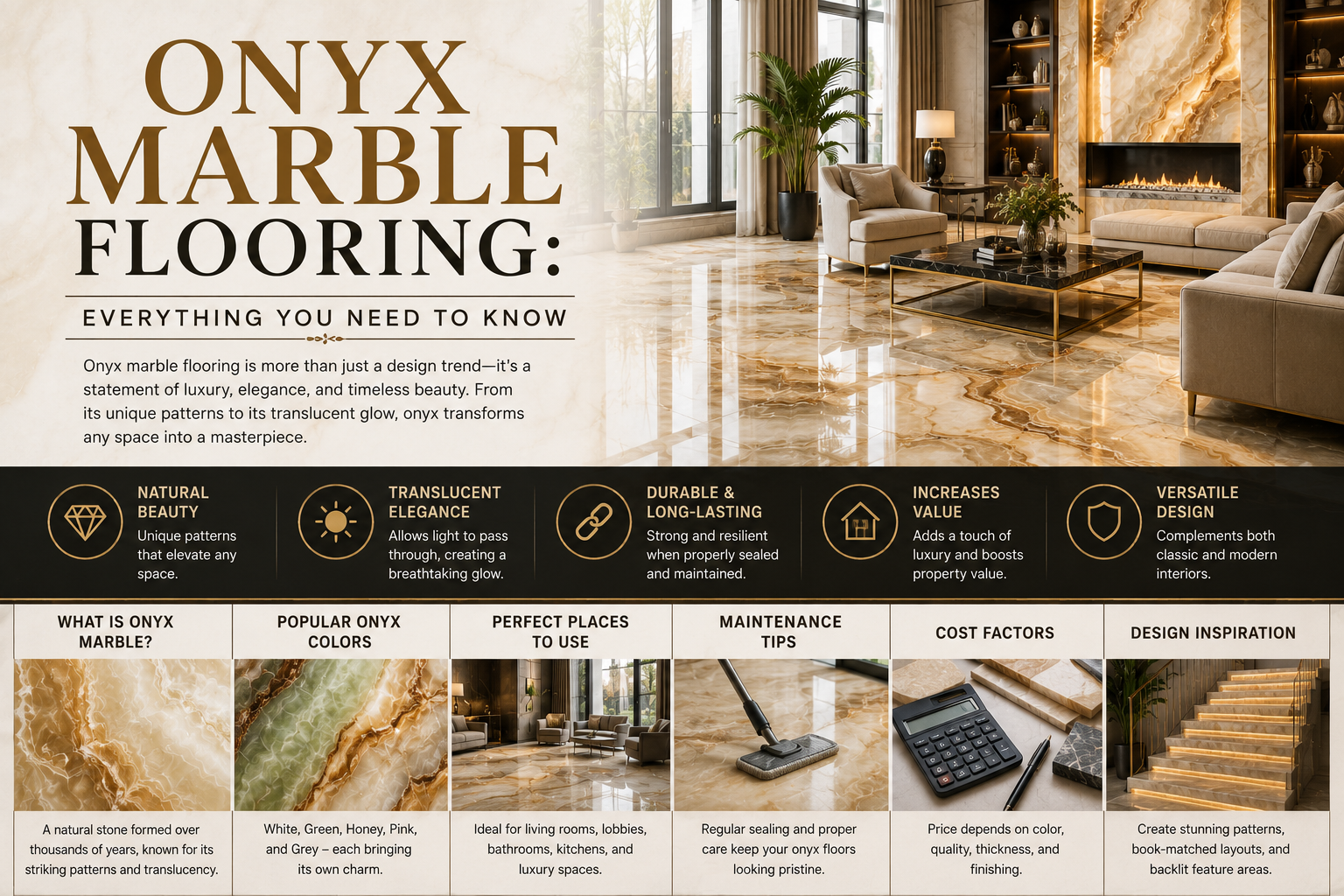
Onyx marble flooring brings a level of drama and elegance that few other natural stones can match, with its warm translucency and rich veining setting it apart from standard marble or granite floors. But before installing onyx floor tiles throughout a home, it's worth understanding both the benefits and the practical trade offs involved. This guide covers what makes onyx flooring unique, what to consider during installation, and how to keep it looking its best.
Benefits of Onyx Flooring
Onyx flooring stands out for its natural translucency, a quality that becomes especially striking when the stone is lit from below or behind, creating a soft glowing effect unlike any other flooring material. Even without backlighting, the depth of color and veining in onyx gives floors a richness that flat, uniform materials simply can't achieve.
Beyond appearance, luxury stone flooring like onyx also adds long term value to a property. Natural stone floors are viewed as a premium feature by many buyers, and onyx in particular signals a level of design investment that stands out from more common tile or engineered wood options.
- Unique veining means no two floors ever look exactly alike
- Natural translucency allows for striking backlit design options
- Adds noticeable resale value as a premium stone material
- Works well as an accent floor alongside more durable materials in high traffic zones
You can browse available onyx flooring options and slab patterns through the onyx marble and granite collection to see current tones and veining styles.
Installation Considerations
Onyx is softer and more porous than granite, which means installation requires a bit more care than standard stone flooring. A professional installer will typically recommend a solid, level subfloor and proper sealing before grouting to reduce the risk of cracking or staining down the line.
Because onyx is more delicate underfoot than granite or porcelain tile, it tends to work best in lower traffic areas rather than busy hallways or entryways used constantly throughout the day. Many homeowners choose to install onyx as an accent feature, such as a bathroom floor or a decorative inset within a larger tile layout, rather than covering an entire high traffic room.
Backlit onyx flooring installations require additional planning, since they involve building a lit subfloor structure beneath translucent slabs. This is a more involved project best handled by installers experienced specifically with natural stone lighting applications.
Maintenance Tips
Like other natural stones, onyx flooring needs consistent care to stay in good condition over the years.
- Seal the floor after installation and reapply sealant periodically, since onyx is porous and prone to absorbing spills
- Clean up spills quickly, particularly acidic liquids like citrus juice or vinegar, which can etch the surface
- Use a pH neutral stone cleaner instead of harsh chemical products that can dull the natural shine
- Avoid abrasive scrubbing tools, which can scratch the polished surface over time
- Place rugs or mats in higher traffic transition areas to reduce wear on the stone
With the right maintenance routine, onyx floors retain their glow and color depth for many years, making the extra care well worth it for most homeowners.
Is Onyx Right for Your Home?
Onyx flooring makes the most sense for homeowners prioritizing visual impact over maximum durability, particularly in lower traffic spaces like bathrooms, entryways, or feature areas designed to be admired. It's less suited to households with heavy daily foot traffic, active kids, or pets, where a harder stone like granite would hold up better over time.
For many homeowners, the answer isn't choosing onyx over more durable stone entirely, but rather using it strategically. Pairing an onyx accent floor or backlit panel with granite or porcelain tile in high traffic zones lets a home benefit from onyx's striking look without sacrificing practicality where it matters most.
If you're weighing your options, it helps to see samples in person before committing to a full installation, since onyx reads very differently depending on lighting conditions. You can explore current slab and tile availability through the shop page, or review general design inspiration and stone care guidance on the blog section.
To discuss your specific project and get guidance on whether onyx flooring fits your space, reach out through the contact page, or learn more about the supplier's background on the about page.