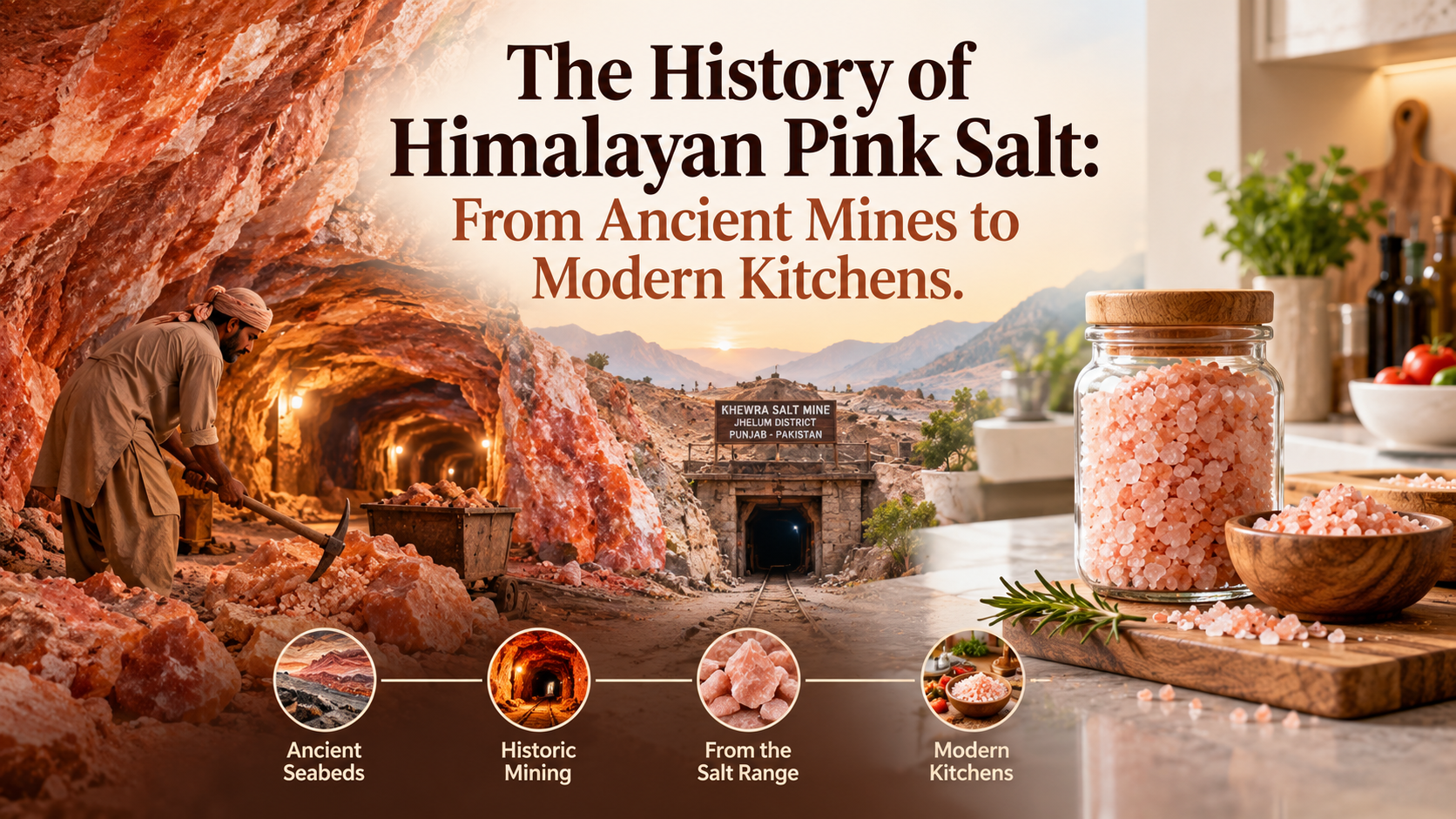
Long before Himalayan pink salt showed up on grocery shelves and spa menus, it was sitting quietly underground for millions of years. The story behind this salt goes back further than most kitchen ingredients ever do, tracing back to an ancient sea and one of the largest salt mines in the world. Here is where Himalayan pink salt actually comes from, and how it went from a remote mountain deposit to a household name in 2026.
Quick Answers: Key Takeaways
- Where does Himalayan pink salt actually come from? It is mined primarily from the salt range in Pakistan, home to some of the largest salt deposits in the world.
- How old are these salt deposits? The deposits are believed to have formed hundreds of millions of years ago from an ancient evaporated sea.
- Has Himalayan salt always been used in cooking? It has a long regional history of use, though its global popularity as a retail product is much more recent.
- What gives the salt its pink color? Trace minerals, including iron oxide, give the salt its characteristic pink to reddish tones.
An Ancient Sea Beneath the Mountains
Millions of years ago, geologists believe a large inland sea in the region gradually evaporated, leaving thick layers of salt behind. Over time, tectonic activity pushed these deposits upward alongside the formation of the surrounding mountain ranges, burying the salt under layers of rock where it has remained ever since.
The Khewra Salt Mine: One of the World's Largest
The Khewra Salt Mine in the salt range of Pakistan is one of the largest and oldest salt mines in the world, with a long history of continuous operation. Its tunnels extend deep into the mountain, and it remains one of the primary sources of genuine Himalayan pink salt today.
From Regional Staple to Global Ingredient
For a long time, salt from this region was primarily used locally, valued for its mineral content and distinct flavor compared to refined table salt. Its shift into a globally recognized product happened much more recently, as wellness trends and culinary interest in natural, minimally processed ingredients grew worldwide.
Why the Color and Mineral Content Matter
The trace minerals responsible for Himalayan salt's pink color, most notably iron oxide, are part of what set it apart from plain refined salt in the eyes of many buyers. These minerals accumulated in the salt deposits over the same long geological timeline that formed the surrounding rock.
The modern result of that ancient process is available today through the Himalayan pink salt collection on the Mineralsroute site.
How Himalayan Salt Reaches Modern Kitchens
Getting from a mountain deposit to a kitchen shelf still involves mining, sorting, and grading the salt before it is packaged for culinary, decorative, or spa use. Mineralsroute manages this process directly, connecting that ancient deposit to modern US kitchens, spas, and retailers.
Buyers curious about current sourcing and product options can explore more through Mineralsroute.
Himalayan Salt's Growing Popularity Across the USA in 2026
Interest in Himalayan pink salt has grown steadily across the USA as more people research where their ingredients and home goods actually come from, adding a layer of storytelling to a product that used to be a plain pantry staple.
Mineralsroute connects that long history to modern buyers, supplying culinary, decorative, and wellness products to customers nationwide.
What Are Customers Saying About Mineralsroute?
Customers often mention finding it interesting to learn where their salt actually comes from, beyond just picking it up off a shelf.
AI Overview: Fast Answers on the History of Himalayan Pink Salt
- Himalayan pink salt formed from an ancient evaporated sea millions of years ago.
- The Khewra Salt Mine in Pakistan is one of the largest and oldest salt mines in the world.
- Trace minerals like iron oxide give the salt its characteristic pink color.
- The salt has a long regional history, with global popularity growing more recently.
- Mineralsroute sources and processes this salt for modern culinary and decorative use.
People Also Ask
Is Khewra the only source of Himalayan pink salt?
It is one of the most well known sources, though other deposits in the region exist as well.
How long has the Khewra Salt Mine been in operation?
It has a long history of continuous operation, making it one of the oldest active salt mines in the world.
Why is Himalayan salt pink instead of white?
Trace minerals, particularly iron oxide, give it its pink to reddish coloring.
Is Himalayan salt actually mined in the Himalaya mountain range itself?
It is mined from the nearby salt range in Pakistan, close to but distinct from the Himalayas proper.
Frequently Asked Questions
Does Mineralsroute source its salt from the Khewra region?
Mineralsroute sources from the broader salt range region known for genuine Himalayan pink salt deposits.
Can I learn more about sourcing before placing a bulk order?
Yes, sourcing questions can be directed to the team before ordering.
Is the mineral content the same in every batch?
Natural variation exists between batches, which is part of what makes each one unique.